
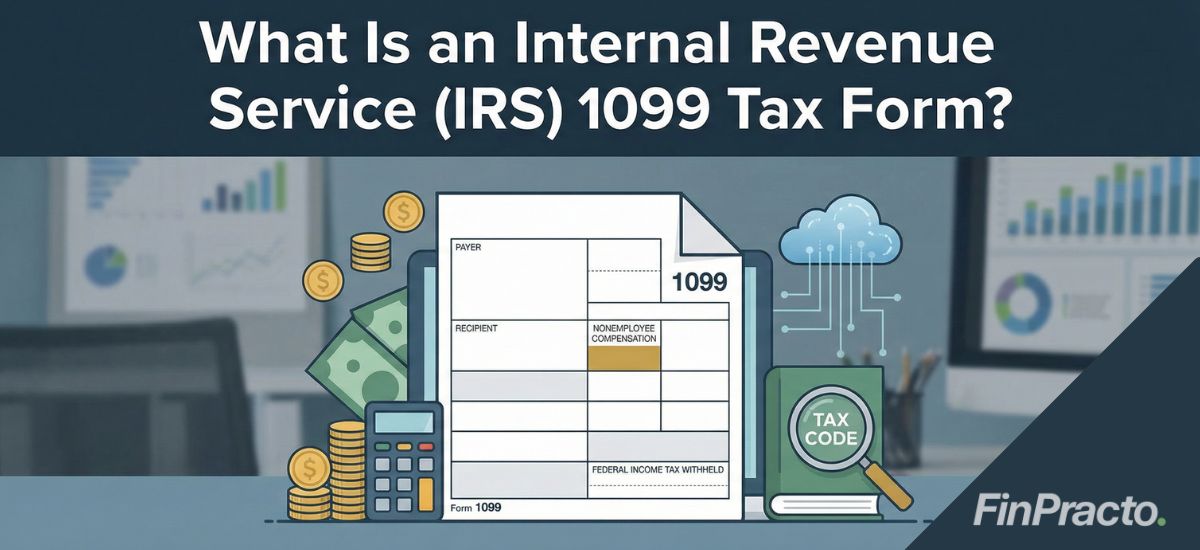
Not all income comes from a monthly salary slip. In today’s evolving economy where consulting, freelancing, investing, and rental income are common the United States tax system relies on a special document to track such earnings: the IRS Form 1099.
Understanding the IRS Form 1099
It is an information return used to report income paid to individuals or businesses who are not treated as employees.
Unlike Form W-2 (Wage and Tax Statement) which reports salaries and wages paid to employees the 1099 form captures non-salary income where taxes are usually not withheld at the time of payment. If income is paid outside the employer employee relationship, it is typically reported using a Form 1099.
Why Is the 1099 Tax Form Issued?
The IRS uses the 1099 form to:
- Track income that does not pass through payroll systems
- Ensure all taxable income is properly disclosed
- Reduce under-reporting of income
- Match reported income with filed tax returns
Both the payer and the recipient submit information to the IRS, creating transparency and accountability.
Types of Income Reported Under the 1099 Series
The 1099 is not a single form but a series of forms, each designed for a specific type of income. Common examples include:
- Payments to independent contractors and freelancers (reported using Form 1099-NEC – Nonemployee Compensation)
- Interest income earned from bank deposits (Form 1099-INT Interest Income)
- Dividend income from investments (Form 1099-DIV Dividends and Distributions)
- Rental income paid during business
- Prizes, awards, and other miscellaneous income
Each form ensures that income earned outside wages is properly documented.
Who Receives a Form 1099?
- A freelancer, consultant, or gig worker
- A professional service provider such as a designer, developer, or advisor
- An investor earning interest or dividend income
- A property owner receiving rental income
- Any individual or entity receiving payments outside a payroll structure
If you receive a 1099, the income reported must be included in your tax return.
Who Is Required to Issue a Form 1099?
A business or organization is generally required to issue a Form 1099 if it:
- Pays United States Dollars 600 or more to a non-employee during the year
- Makes payments during business or trade
- Pays professional fees, rent, or non-employee compensation
Failure to issue the required form can result in penalties imposed by the Internal Revenue Service.
Why the IRS Form 1099 Is Important
For the IRS
- Ensures compliance with federal tax laws
- Improves accuracy in income reporting
For Taxpayers
- Serves as official documentation of income
- Helps prepare accurate tax returns
- Reduces the risk of audits, notices, and penalties
Self-employed individuals generally report Form 1099 income while filing Schedule C (Profit or Loss from Business) as part of their income tax return.
Key Takeaway
It plays a vital role in the United States taxation framework. It ensures that income earned outside traditional employment is properly recorded, reported, and taxed.
If you earn money beyond a regular salary or if your business makes such payments understanding and complying with 1099 requirements is not optional, but essential.
How FinPracto Can Help
Navigating United States tax compliance can be complex. FinPracto assists businesses and individuals with:
- Identifying applicable Form 1099 requirements
- Accurate reporting and filing
- End-to-end compliance support
Connect with us through our website or LinkedIn to ensure your non-payroll income reporting is handled correctly and efficiently.